


Industrial Decarbonization – Our Commitment to Net Zero
Industrial decarbonization is more than a vision - it is a critical mission for our era.
At Nidec Power, we are driving the transition to Net Zero with key actions and innovative energy solutions.
Our ambition is clear: achieve Net Zero by 2050 and empower industries to lead the way toward a sustainable future.
Leading the Way to a Carbon-Free Future with Industrial Decarbonization
Climate change is a global challenge, and we are committed to taking decisive action. Our approach focuses on reducing greenhouse gas emissions, optimizing energy efficiency, and integrating renewable energy sources. This commitment aligns with Nidec Group’s Environmental Philosophy and long-term sustainability goals, ensuring we contribute to a cleaner, greener future.
Our Science-Based Targets for Net Zero and Sustainable Growth
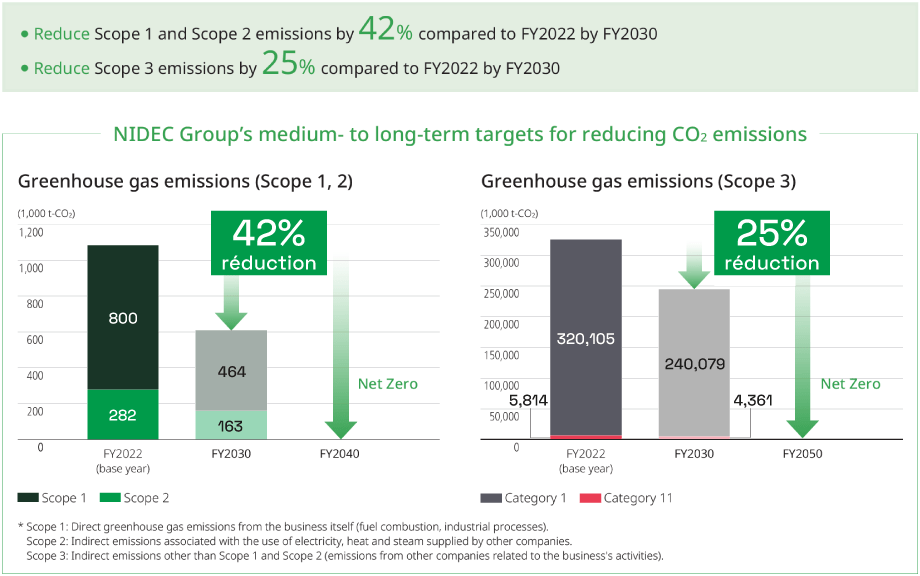
Nidec Corporation Japan (NCJ) has set ambitious targets aligned with the Science Based Targets initiative (SBTi) and we want to go forward thoses goal at Nidec Power level. By 2030, NCJ aim to reduce Scope 1 and Scope 2 emissions by 42% ; Us, as Nidec Power, commits to reduce it by 50%.
Together, we agreed to be Net Zero by 2040.
For Scope 3 emissions, we aligned to reduce it by 25% by 2030, with the ultimate goal of achieving Net Zero by 2050.
These measurable objectives demonstrate our dedication to industrial decarbonization and global climate action.
Key Actions Driving Change Toward Energy Efficiency and Net Zero
Our decarbonization strategy is powered by concrete actions designed to accelerate the transition to Net Zero:
- Deploying advanced decarbonization solutions for heavy industry
- Optimizing energy management across all industrial sites
- Developing Power Purchase Agreements (PPAs) to integrate renewable energy
- Creating internal tools to support responsible purchasing practices
Don't miss out on our key actions,
sign up for our newsletter!
Managing Resources Responsibly to Reduce Environmental Impact
Our sustainability strategy goes beyond carbon reduction. We are committed to minimizing environmental impact through waste and water management. Targets include reducing waste intensity by at least 3% compared to FY2022, improving recycling processes, and applying eco-design principles to cut iron and hazardous waste. For water, we aim to reduce consumption by 10% by 2028, supported by robust tracking systems across all sites.
Waste and Water Goals for Circular Economy and Sustainability
To minimize our environmental footprint, we have set clear objectives for waste reduction and water management across all operations:
- -3% waste intensity per unit sales from FY2022 levels
- Enhanced recycling and hazardous waste reduction
- Water use monitoring and reuse systems implemented by 2026
A Collective Effort for Sustainability and Corporate Responsibility
Every initiative reflects our belief that sustainability is a shared responsibility. By integrating renewable energy, optimizing resources, and innovating for efficiency, we are building a resilient, environmentally responsible business model. Together, we are contributing to a carbon-free society and ensuring a sustainable future for generations to come.

Learn how we integrate circular economy principles and transparent Environmental Product Declarations by exploring our next page:
Environmental Product Declaration & Circular Economy